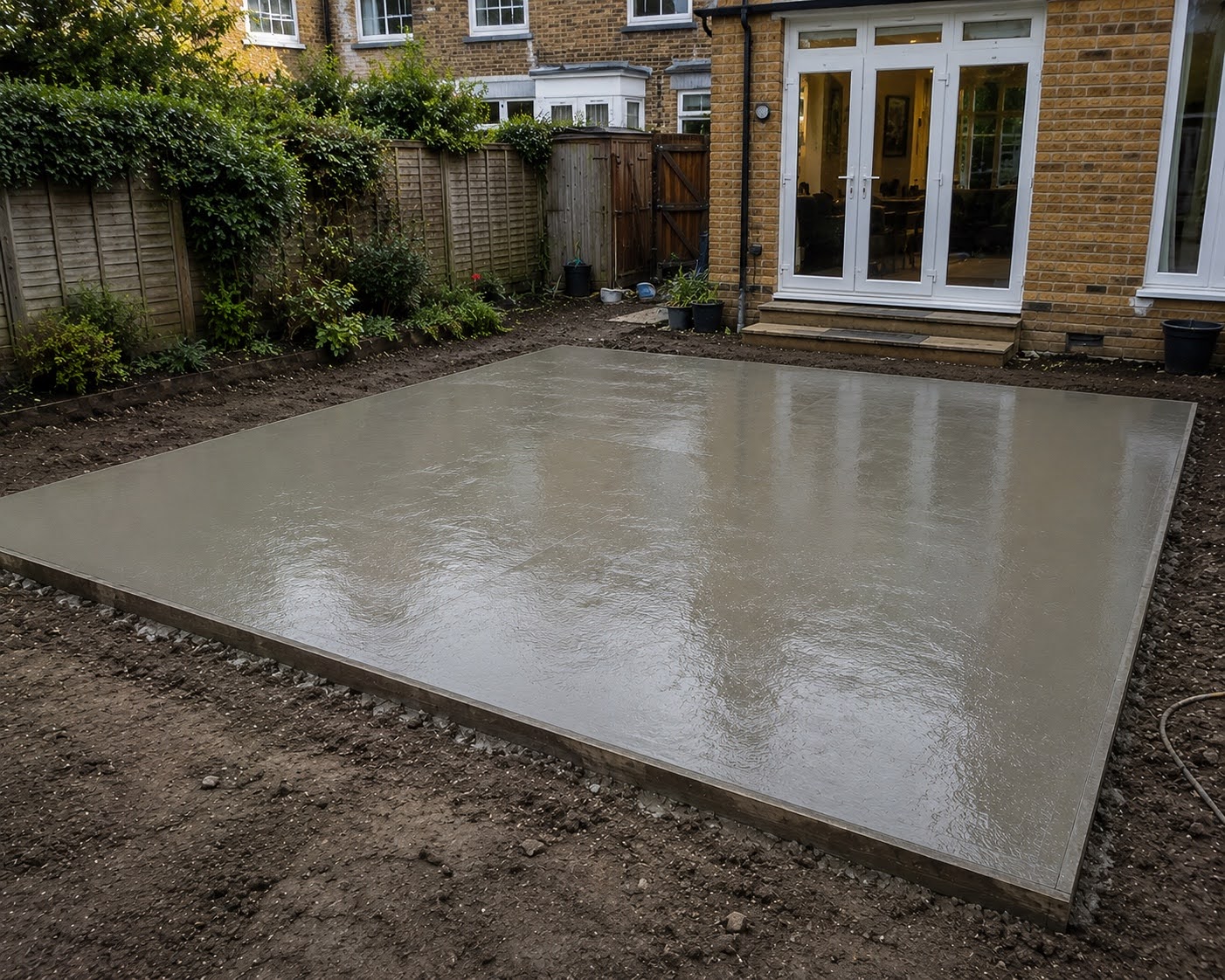
Concrete Shed Base Installations in Edmonton
Our team at Enfield concrete bases regularly install concrete bases for homeowners in Edmonton.
If you're planning to have an outside building in your Edmonton garden, the base underneath is one of the most important parts of the whole setup.
We install concrete bases that provide level, stable and long term surfaces for all different types of garden buildings.
Our concrete base installations are designed to make sure your structure above will perform without having any future issues.
Our work focuses specifically on concrete bases and building foundations.
Garden Conditions We Often See in Edmonton
Every location has its own quirks when it comes to ground conditions, and Edmonton is no different. Many properties in parts of Edmonton sit on clay-heavy soil, which expands and contracts depending on how much moisture is in the ground.
If a concrete base is poured directly onto soil without the correct preparation underneath, that natural ground movement can eventually cause the slab to shift or settle unevenly.
Many Edmonton properties sit on clay-based ground which expands and contracts with moisture changes. If a shed base is poured directly onto soil without proper sub-base preparation, movement can occur within the first year.
Garden levelling is another common situation we see locally. Some Edmonton gardens have slight slopes or uneven ground from previous landscaping work, so preparing the base correctly before pouring the concrete becomes essential.
Access can also play a role. A lot of Edmonton homes are terraced or semi-detached with narrower side access, which means planning how materials move into the garden is part of doing the job properly.
How We Install Concrete Bases in Edmonton
Installing a reliable concrete base starts with our teams preparation before we even begin pouring any concrete.
We begin by assessing the garden space and identifying the ground conditions so the slab is built on a stable foundation.
We then excavate the area to the correct depth, a compacted sub-base is installed, and edge forms are set so the final slab finishes level and square. Only once the base preparation is complete do we pour and level the concrete.
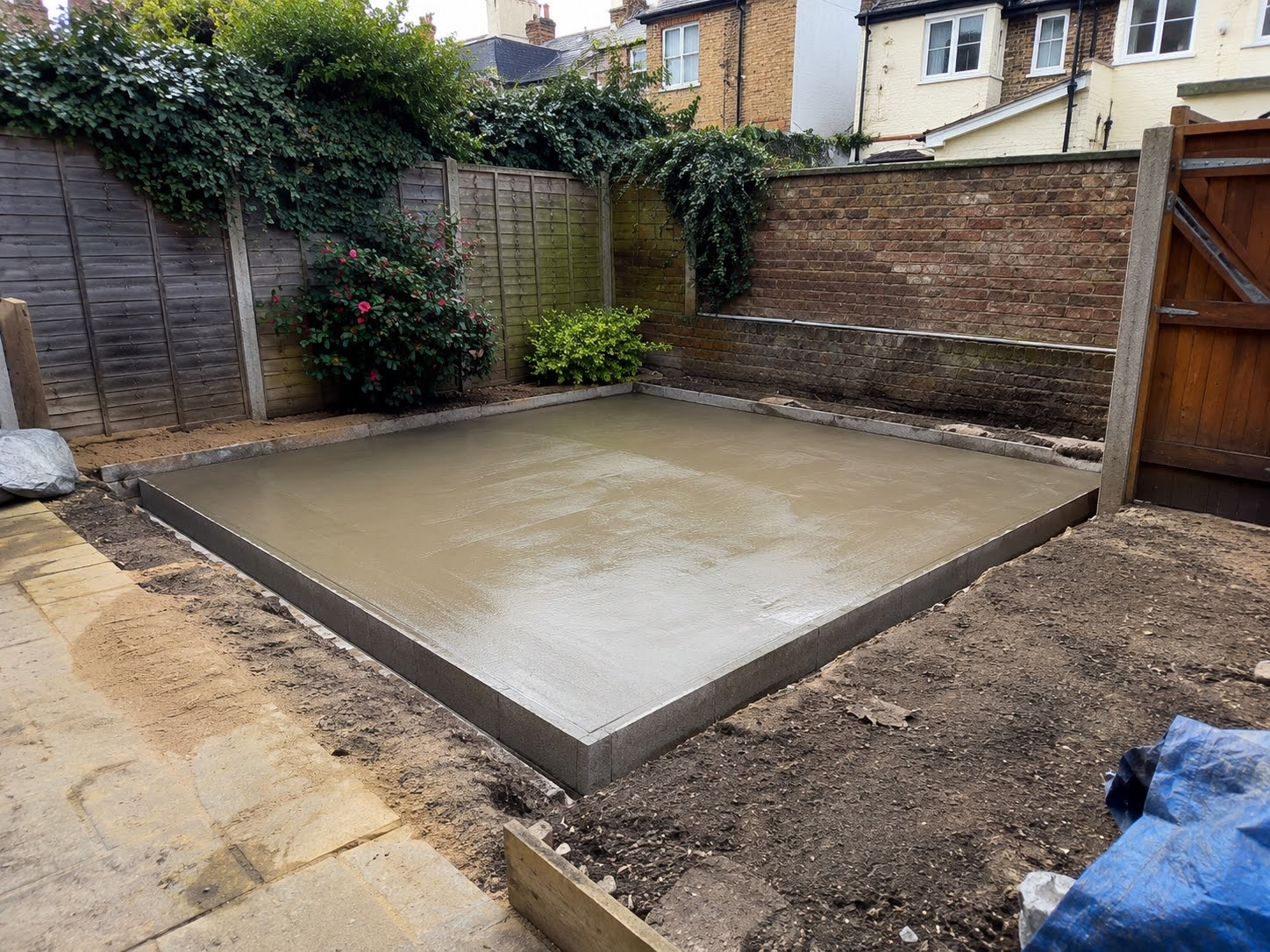
This process ensures the finished base sits properly on the ground underneath it. That preparation is what helps prevent future movement or cracking.
How Long Concrete Base Installations Usually Take
For many Edmonton installations the work itself can often be completed within a day once the site preparation is ready. The exact timing depends on factors such as base size, ground preparation required and access to the garden.
Larger bases or sites that require more excavation may take longer, but the process is always planned so the installation runs efficiently and the concrete is poured correctly.
Edmonton Concrete Base FAQs
Do I need a concrete base for a garden shed in Edmonton?
While some smaller sheds can sit on alternative bases, a concrete base provides the most stable and durable option, especially for larger sheds or log cabins.
Will clay soil in Edmonton affect my shed base?
Clay soil can expand and contract depending on moisture levels. Proper sub-base preparation underneath the concrete helps prevent movement caused by these changes.
How big should my concrete shed base be?
The base is normally slightly larger than the shed footprint to ensure full support across the structure.
Can you install bases in small Edmonton gardens?
Yes. Many Edmonton gardens are compact, particularly with terraced homes, so installations are often planned around restricted access and tighter spaces.
How do I get a quote for an Edmonton concrete base?
The easiest way is simply to call. We can discuss the size of the base, your garden layout and give you a same-day idea of what the installation involves.