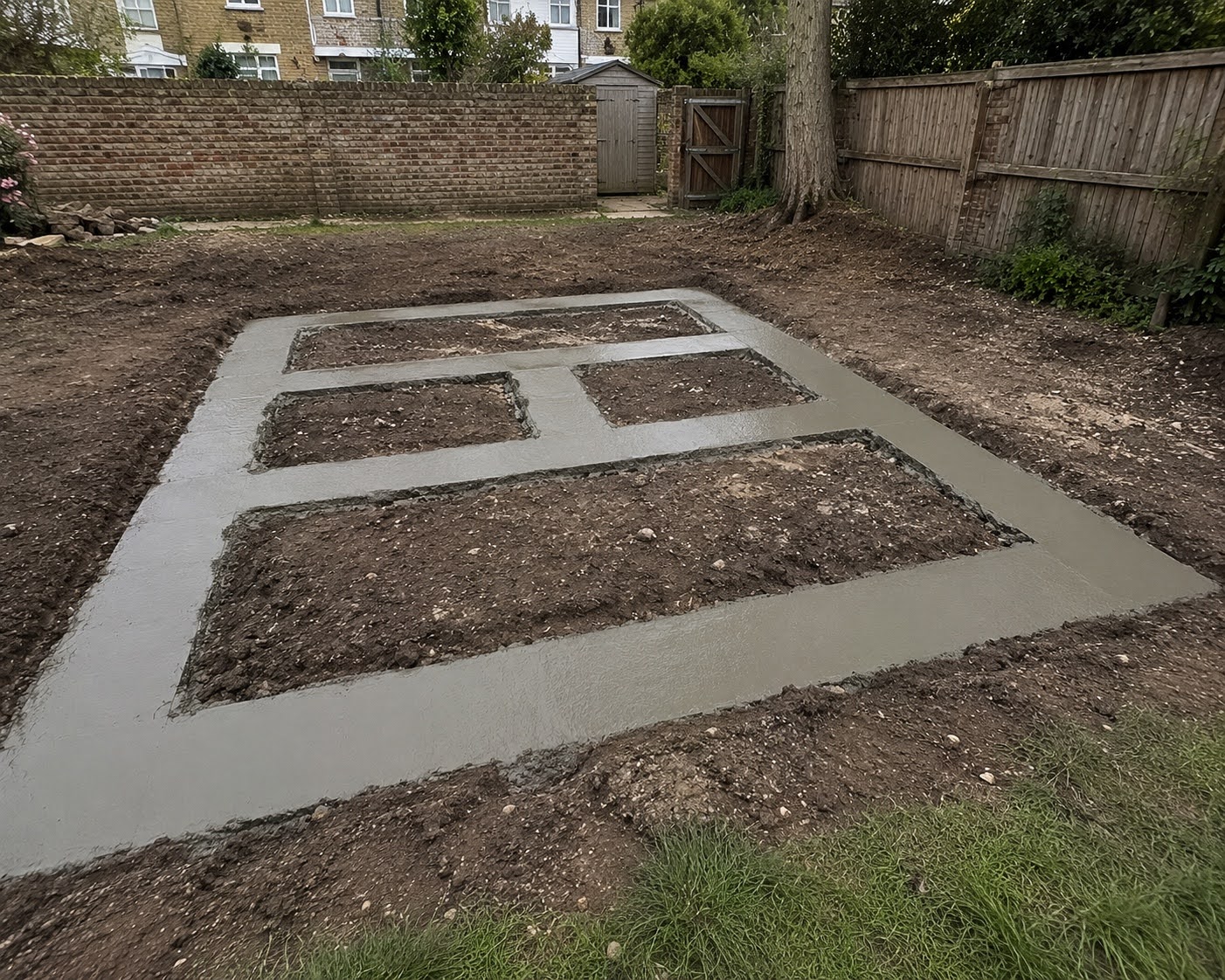
Reliable Trench Fill Installations in Enfield
We at Enfield concrete bases install trench fill foundations across Enfield for homeowners looking for a faster foundation system that provides excellent structural support without needing to build traditional foundation walls. If you're constructing a new outdoor structure, we make sure the foundation underneath it is designed for the ground conditions on your property.
A trench fill foundation works by excavating trenches down to suitable bearing ground before filling them with concrete to create a solid foundation for the structure above. Once complete, the load is transferred safely into the ground, giving the building the support it needs from day one.
Many of the projects we carry out involve soft ground where deeper excavation is required before concrete can be poured. Every site is different, so we plan the excavation depth, ground preparation and concrete placement around the conditions of your property and garden.
What Trench Fill Foundation Installation Actually Involves
A trench fill foundation removes much of the traditional brick or block foundation work by replacing it with a deep concrete-filled trench. Once the trenches have been excavated to suitable bearing ground, they're filled with concrete to create a strong foundation ready for the structure above.
Although trench fill foundations generally use more concrete than traditional strip foundations, they're often chosen because the installation is much quicker. Once the excavation has been completed and checked, the concrete can normally be poured in a single operation, reducing the amount of groundwork required before construction continues.
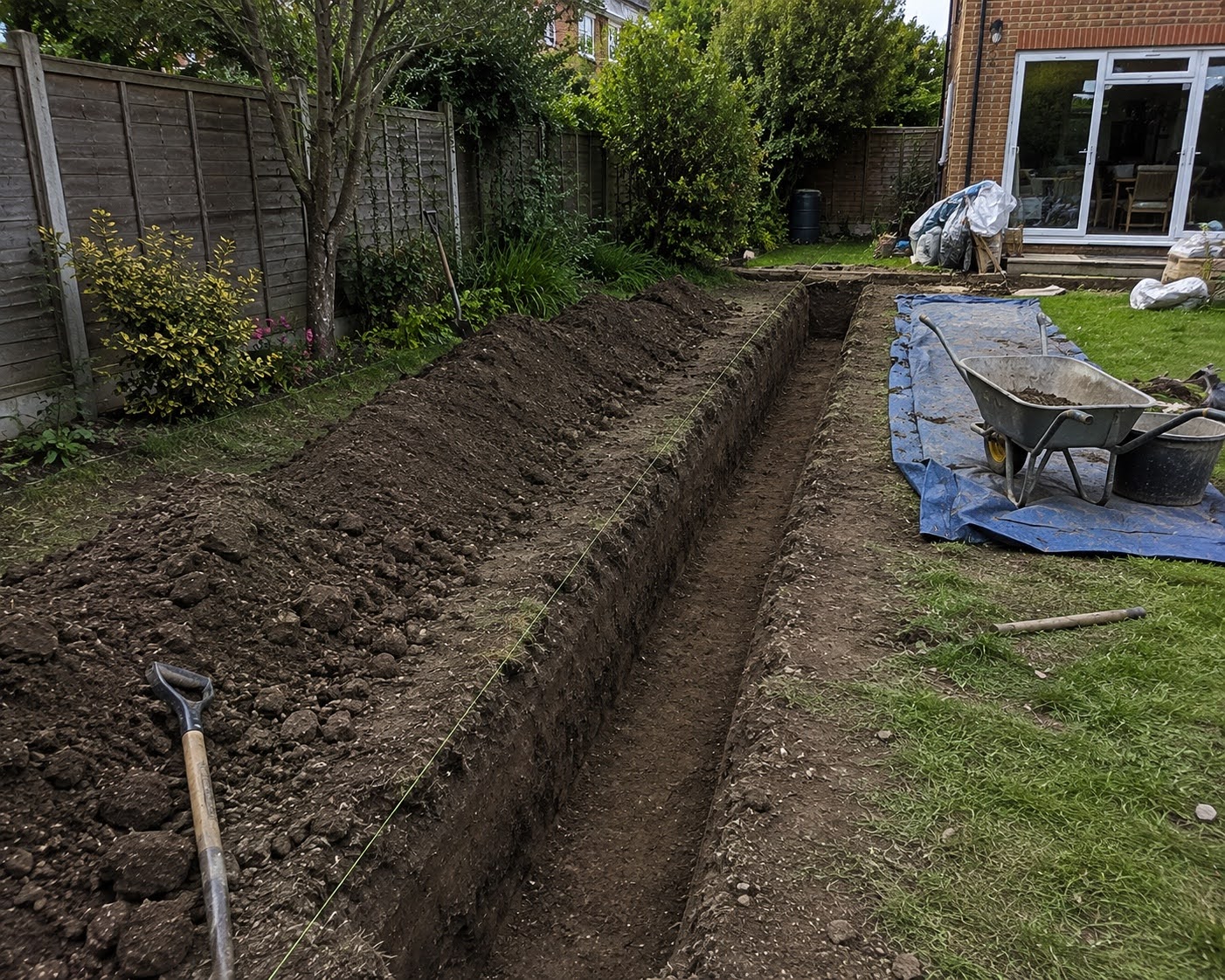
We dig each trench to the required depth, removing loose or unsuitable material until stable ground is reached. On sites with softer ground, this often means excavating deeper than originally expected to ensure the foundation is supported by ground capable of carrying the load of the new structure.
Before any concrete is poured, we inspect the trench bottoms to make sure they're clean, stable and free from standing water or loose material that could affect the finished foundation.
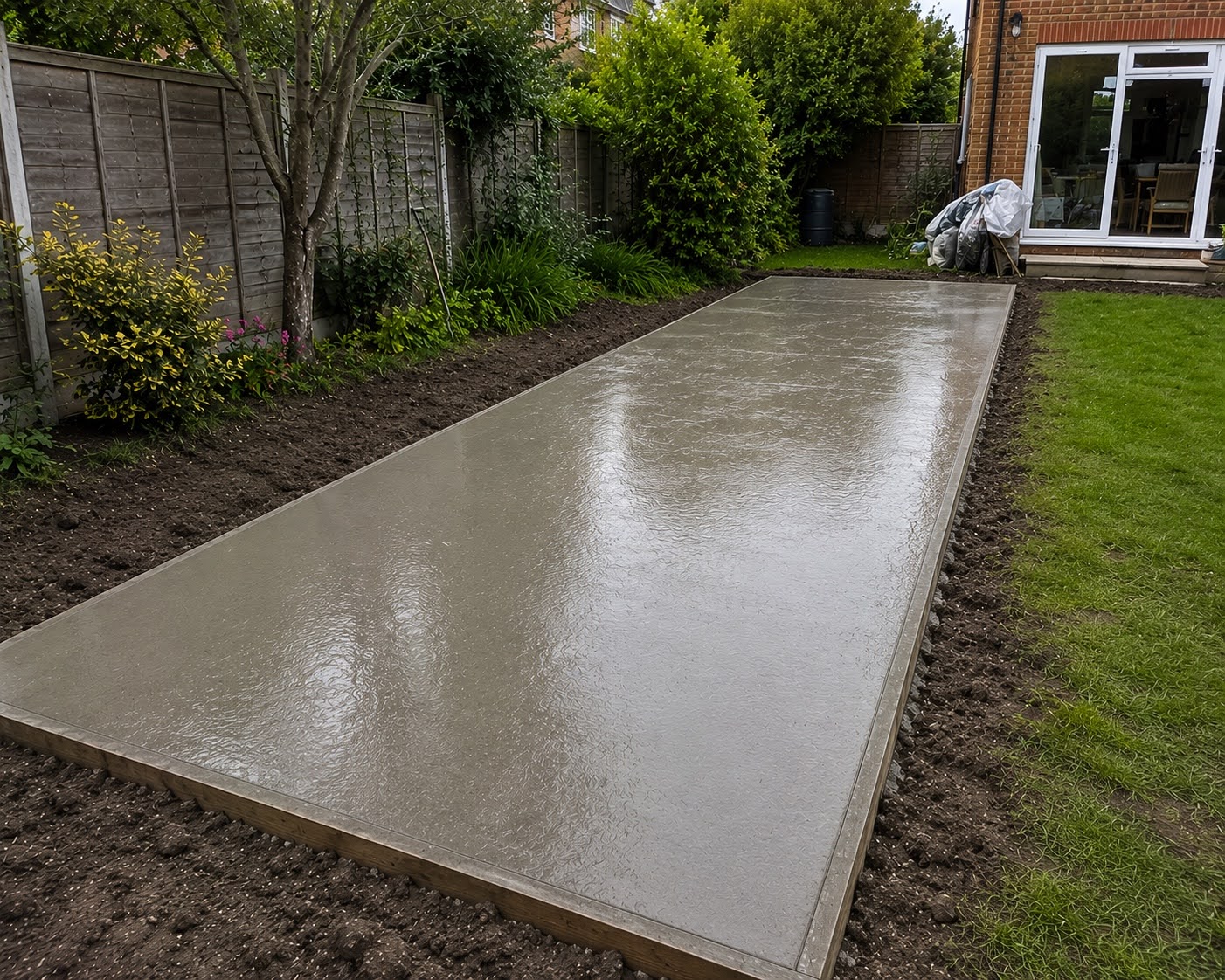
For many domestic projects, ready-mixed concrete is delivered directly from the batching plant on the day of the pour. This provides consistent concrete throughout the foundation while allowing the trenches to be filled efficiently before the concrete begins to cure.
Where reinforcement has been specified for the project, it's positioned correctly before or during the pour so the foundation performs as intended. Every project is different, which is why we work to the structural requirements of the individual build rather than treating every installation the same.
Difficult access is something we deal with regularly across Enfield. If a rear garden is surrounded by extensions, conservatories or narrow side access, we simply adjust how materials are moved around the property. Planning these logistics before work starts keeps the installation organised, reduces unnecessary disruption and helps the project run smoothly from excavation through to the concrete pour.
Why Drainage Should Never Be Overlooked
One of the biggest mistakes we see isn't usually the concrete itself—it's what happens around the foundation. If drainage hasn't been considered before excavation or surface water is allowed to collect around the foundation, it can create problems long after the concrete has cured.
A trench fill foundation is designed to transfer the weight of the structure safely into the ground, but the surrounding ground conditions still matter. Water that continually sits against the foundation can soften the surrounding soil over time, making proper drainage just as important as the concrete that's been poured.
That's why we look at the site as a whole rather than focusing only on the excavation. Before work begins, we assess how water naturally moves across the garden, whether there are low spots that collect water and if any existing drainage needs to be taken into account during the installation.
Common Problems Caused By Poor Drainage
When drainage is ignored, the issues often don't appear immediately. They usually develop gradually as water repeatedly affects the ground surrounding the foundation.
- Standing water collecting around the foundation after heavy rain.
- Softening of the surrounding ground over time.
- Water sitting against external walls once construction is complete.
- Muddy areas developing around the finished structure.
- Extra remedial work that could have been avoided during the original installation.
No Shortcuts During Preparation
Our approach is straightforward. We don't rush the groundwork just to get concrete into the trench sooner. We make sure the excavation is ready, the surrounding ground has been considered and the foundation is installed properly the first time. That preparation helps avoid unnecessary problems and gives the structure above the support it was designed to have.
Trench Fill Foundation Installation FAQs
What is a trench fill foundation?
A trench fill foundation is a foundation system where trenches are excavated down to suitable bearing ground before being filled almost entirely with concrete. Unlike a traditional strip foundation, there's usually very little brick or blockwork below ground level, allowing construction above the foundation to begin sooner.
Why choose trench fill instead of a strip foundation?
Although trench fill foundations generally require more concrete, they're often quicker to install because the trenches are filled directly after excavation. This reduces the amount of below-ground masonry needed and can help keep the overall build moving more efficiently.
Can trench fill foundations be installed on soft ground?
Yes, provided the excavation reaches suitable bearing ground. Soft ground often means the trenches need to be dug deeper than originally expected, which is why the ground is assessed throughout the excavation rather than working to a fixed depth regardless of site conditions.
How long does the installation usually take?
Every project is different, but many domestic trench fill foundations can be excavated and concreted within a relatively short timeframe once the site is prepared. The exact programme depends on the size of the foundation, ground conditions, access and concrete delivery arrangements.
Will restricted garden access stop the work?
Not necessarily. Restricted access is common on residential properties throughout Enfield. We plan how excavation equipment, materials and concrete will reach the work area before the project starts so the installation can be carried out as efficiently as possible.
Do you arrange the concrete?
Yes. For most projects, ready-mixed concrete is supplied directly from a batching plant on the day of the pour. This provides consistent concrete throughout the foundation and allows the installation to be completed efficiently.
Can you work around existing extensions or conservatories?
Yes. Many properties we work on already have extensions, conservatories or limited side access. These factors simply require more planning before work begins so that excavation, material deliveries and the concrete pour can be carried out safely and with as little disruption as possible.
How do I get a quote?
The easiest way is to give us a call or send your project details by email. If you have drawings, dimensions or information about the proposed structure, we can discuss the most suitable foundation approach and provide a quotation based on your project.