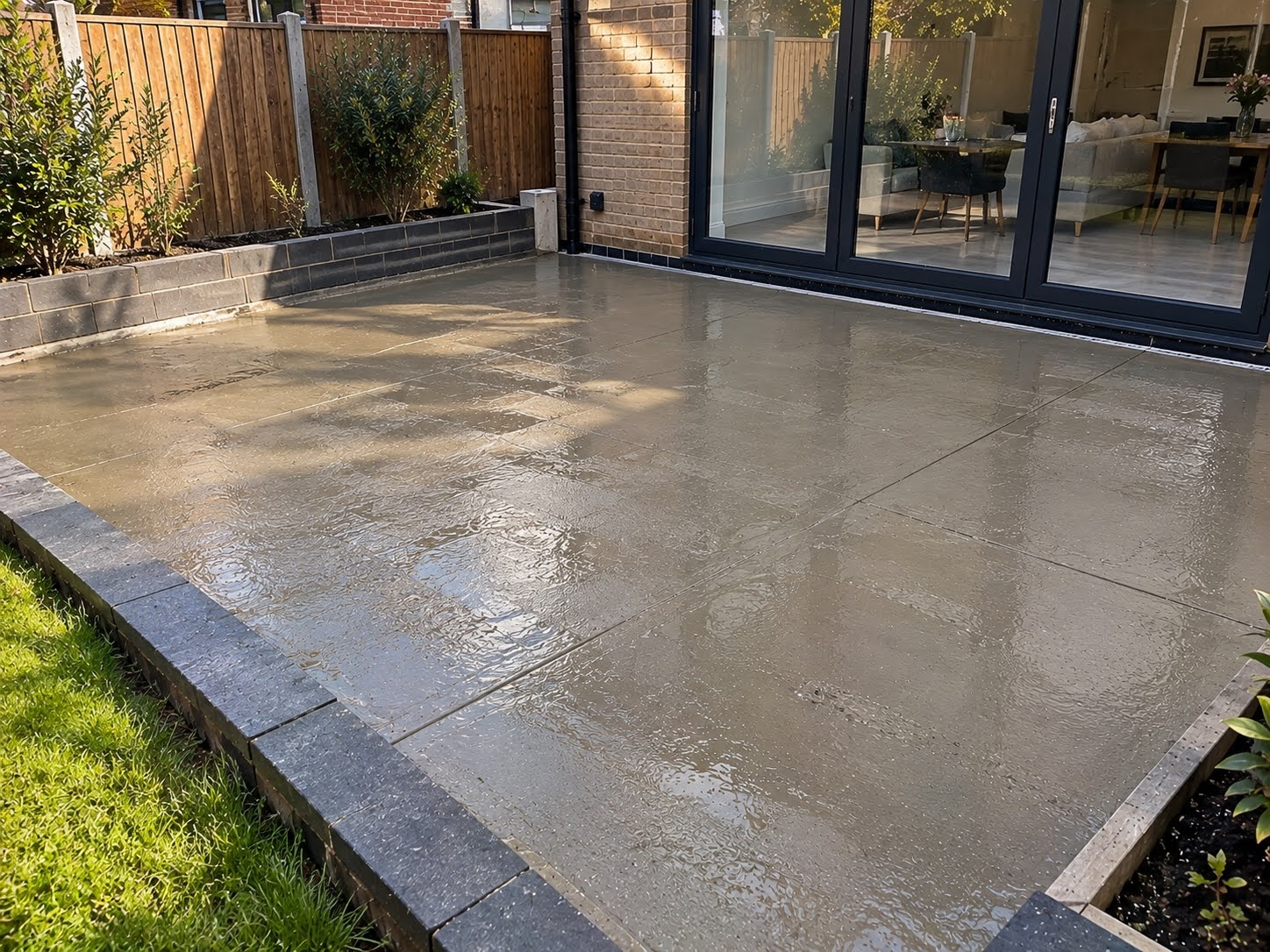
Our Enfield concrete resurfacing team restores worn and deteriorating residential concrete surfaces, helping homeowners get more use from existing concrete without automatically replacing the entire slab.
We carry out resurfacing work on garden concrete, patios, pathways and existing bases where the underlying concrete remains suitable for repair.
The first thing we establish is whether the existing slab is actually sound enough to resurface. A surface can look tired, rough or cracked without necessarily needing complete removal, but movement and deeper structural damage need a different approach.
We prepare the existing concrete, deal with suitable localised defects and apply the appropriate resurfacing system to achieve a consistent, hard-wearing finish.
Our priority is making sure the new surface remains properly bonded and performs under everyday use, rather than simply covering the old concrete to make it look finished.
We work on existing residential concrete where surface deterioration has made the area difficult to maintain, unattractive or unsuitable for its intended use.
Older garden slabs often develop rough patches, exposed aggregate and general surface wear. Where the concrete underneath remains stable, we can prepare and resurface it to provide a more consistent finish.
We also check how rainwater moves across the area. An outdoor resurfacing job needs to retain suitable drainage falls rather than leave water collecting against the house or garden structures.
Worn garden paths and side passages can often be renewed without excavating the entire route.
We assess damaged edges, loose material and changes in surface height before carrying out the preparation. The finished surface needs to remain practical for walking and suitable for outdoor conditions.
Homeowners sometimes have an existing concrete pad they want to reuse for a replacement shed or small garden building.
Before resurfacing, we check the base dimensions, condition, levels and whether it can support the proposed structure.
If the slab is sound but has suitable surface defects, resurfacing may be an option. If it has settled, fractured or lacks adequate support underneath, we will explain why a repair or replacement may be more appropriate.
We also assess general concrete slabs with surface scaling, shallow deterioration and uneven finishes.
The repair method depends on the depth of damage, the existing concrete strength and how the area will be used once the work is completed.
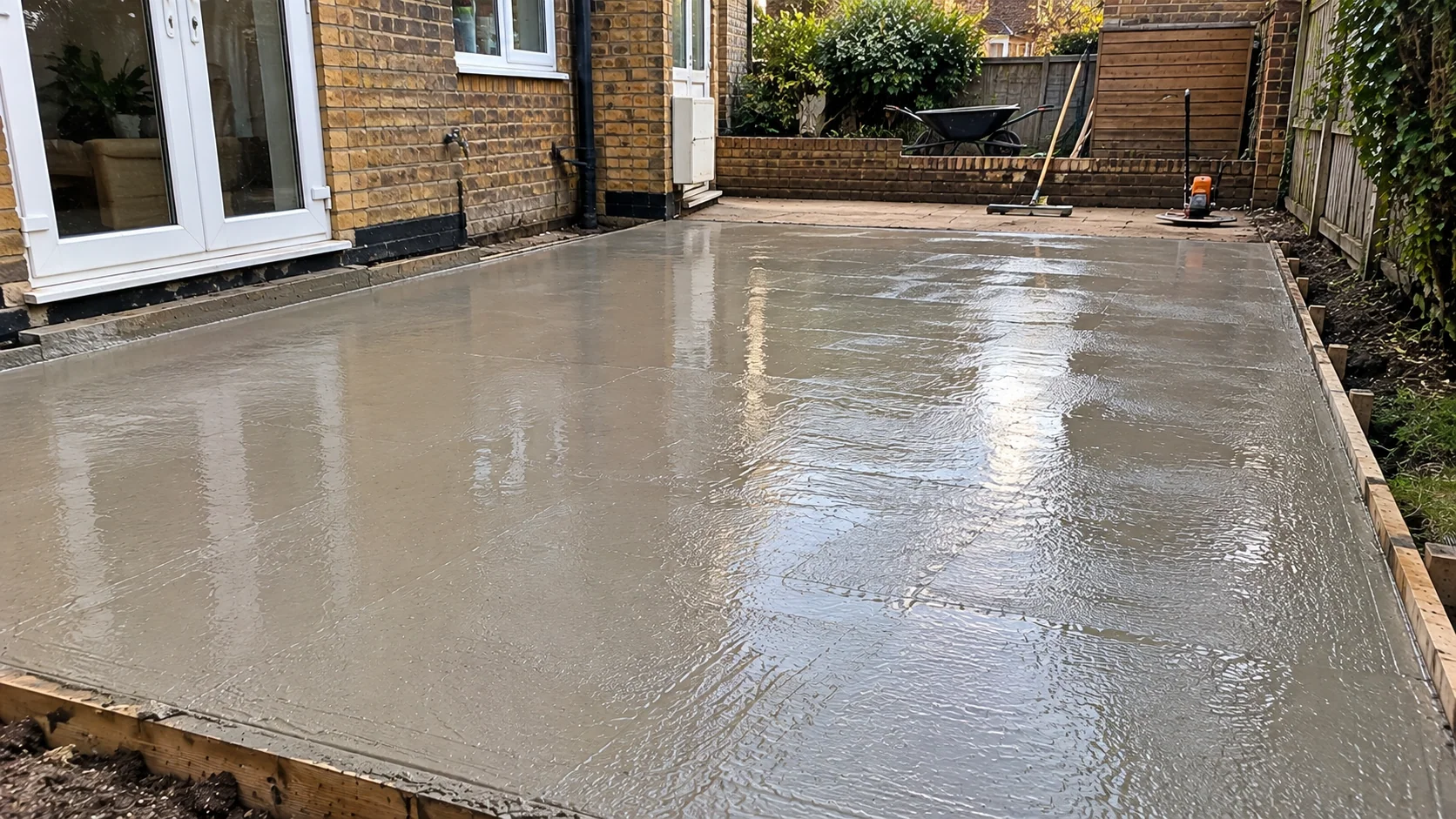
Most of the important work happens before the new resurfacing material goes down. We need a stable, properly prepared surface so the new layer has the best possible chance of bonding and lasting.
We start by checking the slab for cracking, hollow or loose areas, settlement and signs of movement.
This tells us whether the job is suitable for resurfacing or whether repairs to the existing concrete need to come first.
We remove loose concrete, contamination and unsuitable surface coatings using preparation methods appropriate to the slab.
Grinding or other mechanical preparation may be required to expose a sound surface with the correct profile for the resurfacing system.
Suitable shallow defects and damaged edges are repaired before resurfacing. We also deal with joints and existing cracks according to their condition rather than simply hiding them beneath a new layer.
Once preparation is complete, we apply the selected resurfacing material in accordance with its required thickness, bonding and curing conditions.
We work carefully around edges, thresholds and drainage falls, finishing the surface for its intended use.
We protect the finished work while it cures and explain when the surface can safely take foot traffic or other loads.
The curing period depends on the resurfacing product, weather conditions and the intended use of the concrete.
A common enquiry is from homeowners replacing an old shed or preparing an existing concrete area for a new garden building.
If there is already a concrete base in place, we check whether it is worth retaining before recommending resurfacing.
For a small garden shed, the base needs to be stable, correctly sized and suitable for the loads from the structure. A fresh surface alone will not correct an inadequate foundation.
We pay particular attention to slabs that have been laid over soft ground. If the ground underneath has settled or the original sub-base was poorly compacted, adding another surface layer will not prevent further movement.
Where necessary, we can discuss more substantial concrete base repair or replacement, including excavation, a properly compacted granular sub-base, formwork and reinforcement where specified.
For replacement concrete, we plan the concrete supply around the volume required and the available access, whether that involves ready-mixed concrete or an appropriate small-batch approach.
The aim is straightforward: your new shed should sit on a working base prepared for the building itself, not just a slab that has been made to look new.
A resurfaced concrete area needs to do more than look good on completion day. We focus on the condition of the existing slab, surface preparation and the demands the finished area will face.
A garden pathway needs a practical outdoor finish. A patio needs suitable falls and a surface that can cope with weather exposure. An existing shed base needs to remain stable beneath the building.
We select the resurfacing approach around those requirements rather than treating every concrete surface as the same job.
Proper bonding, suitable application thickness and correct curing all contribute to how the finished surface performs.
Where reinforcement is relevant to a replacement slab, we assess that separately. Reinforcement does not compensate for unstable ground, and a thin resurfacing layer is not a substitute for structural concrete.
Our approach is to establish what the concrete needs before starting, so the completed work is suited to its intended purpose and less likely to require avoidable remedial work.
One of the biggest mistakes with resurfacing is applying a new finish over concrete that is already moving or breaking down underneath.
The new surface may initially look sound, but underlying movement can cause cracks to reappear, sections to separate or the resurfacing material to fail.
If an old shed base is settling because of poor ground support, resurfacing it will not stop the slab moving.
Once a new shed is installed, uneven movement can affect the building's alignment. Doors may begin sticking, panels can become distorted and gaps may develop around the structure.
This is why we check the supporting concrete before recommending any surface renewal.
Applying resurfacing material over dust, loose concrete or contamination can prevent proper adhesion.
That can lead to hollow patches, flaking or delamination, leaving the homeowner paying to repair the same area again.
Existing cracks need to be assessed before resurfacing. Active movement and structural cracking cannot reliably be solved by covering them with a thin new layer.
We identify which defects can be repaired and which indicate that more extensive work is needed.
Incorrect finished levels can leave rainwater collecting in low areas or running towards a house, shed or other structure.
We account for drainage and adjoining levels during preparation rather than discovering the problem after the resurfacing has cured.
We approach concrete resurfacing as a working repair job, not simply a cosmetic improvement.
Before recommending the work, we want to understand why the existing concrete has deteriorated and what the homeowner needs the finished surface to support.
If the slab is suitable for resurfacing, we explain the preparation involved and the finish we can achieve.
If the concrete is unstable, badly fractured or unsuitable for another layer, we would rather explain the problem at the beginning than carry out work that is unlikely to last.
We keep installations organised, plan around garden access and communicate clearly about the work involved, including preparation, curing and when the area can be used again.
Doing the job properly from the start is what matters. It reduces the likelihood of repeated repairs and gives homeowners a clear understanding of what they are paying for.
If you have an existing concrete surface in Enfield that needs attention, send us a few photographs and the approximate dimensions. We can discuss whether resurfacing is a sensible option for your property.
Yes, provided the existing concrete is structurally sound and suitable for the resurfacing system. We check for movement, loose areas and deeper cracking before recommending the work.
That depends on the cause and severity of the cracking. Minor stable defects may be repairable, but cracks caused by settlement or ongoing movement normally require more than surface treatment.
Certain surface irregularities can be corrected within the limits of a suitable resurfacing system. Significant settlement, unstable sections or major level differences may require concrete repair or replacement.
Smaller residential resurfacing jobs may be completed within a day once preparation is ready, although repairs, surface condition and access can extend the work. Curing time is additional and depends on the material used.
Yes, restricted access is something we account for when planning residential concrete work. We establish how equipment and materials can be moved through the property before arranging the installation.
If you already have a stable concrete base of the correct dimensions and suitable strength, resurfacing may help prepare the surface. If you are starting on bare or soft ground, a properly constructed new base is normally required instead.
The cost depends on the area, existing concrete condition, preparation required and chosen resurfacing system. Send us the approximate measurements and photographs so we can assess the work and provide an estimate.